
Sodium Metal Battery Keeps 90% Capacity After 1,000 Cycles
A new non-flammable polymer electrolyte helped a sodium metal battery keep 90.4% of its capacity after 1,000 cycles. Here is how it works.
 Hakkı ALKAN
Published 2 min read
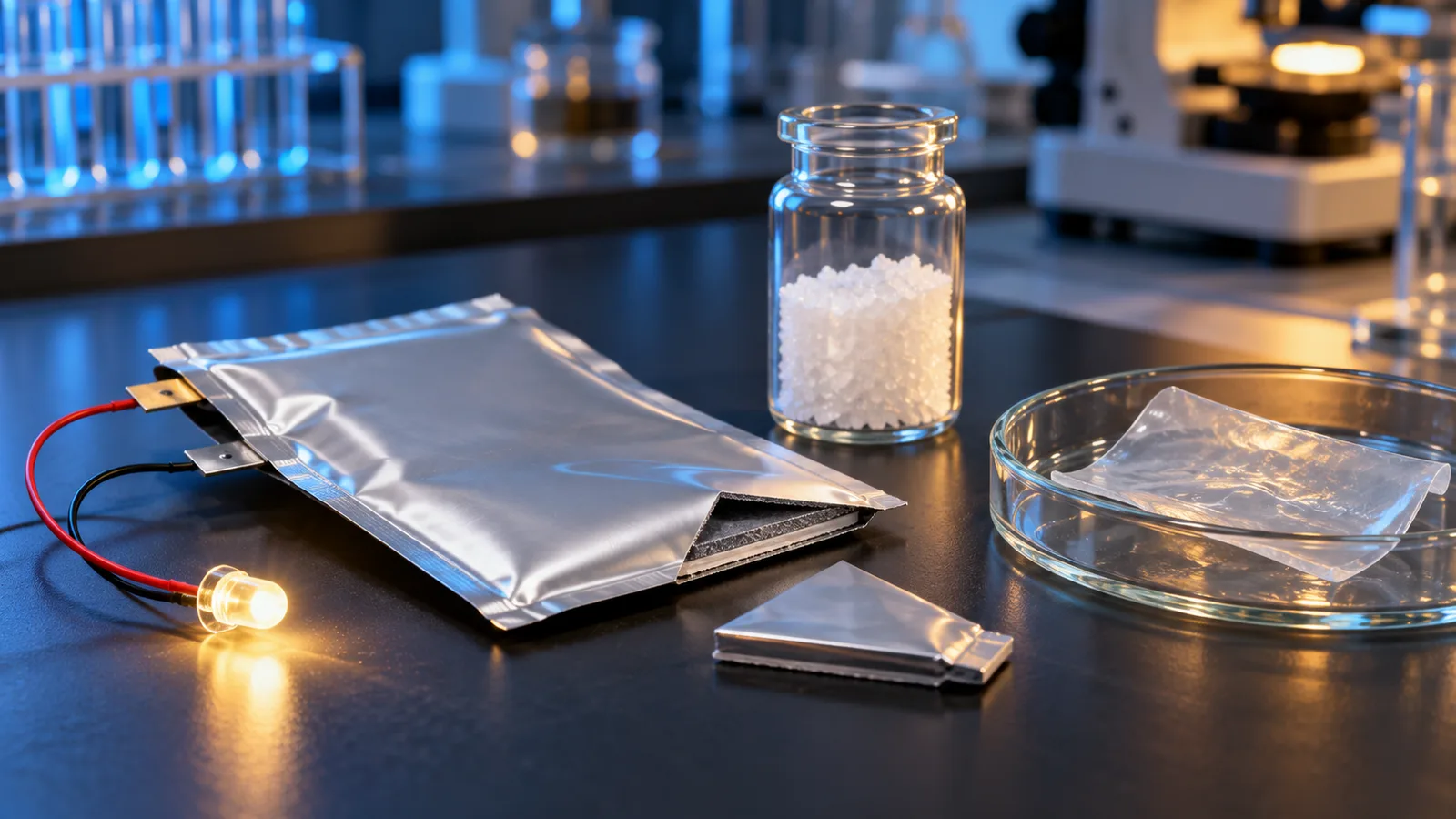
A sodium metal battery built by researchers at Chonnam National University in South Korea kept 90.4% of its capacity after 1,000 charge cycles, thanks to a new non-flammable polymer electrolyte. The team, led by Professor Chan-Jin Park, says the material also resists leaks, and a pouch cell using it kept an LED lit even after it was folded and cut.
The work was published in Volume 90 of the journal Energy Storage Materials, and the university announced the results in a press release on October 30, 2026.
Why the Sodium Metal Battery Needs a Better Electrolyte
Sodium is cheap and plentiful, which is why battery makers see it as an alternative to lithium. Most commercial sodium cells today are sodium-ion designs, such as the long-life cells CATL has been promoting. A sodium metal battery goes further by using metallic sodium as the anode, which can store more energy but is far harder to tame.
Metallic sodium reacts easily with ordinary liquid electrolytes. During charging it can grow needle-like deposits called dendrites, which damage the cell and can cause short circuits. Liquid electrolytes are also flammable and can leak, so safety has been the main barrier to practical use.
How the New Polymer Electrolyte Works
The Korean team mixed three ingredients: sodium perchlorate (NaClO4) as the sodium source, N-isopropylacrylamide (NIPAM) and succinonitrile. Together they form a so-called deep eutectic solvent, a liquid held together by hydrogen bonds and ion-dipole interactions. The researchers then polymerized it inside the cell, turning it into a solid matrix that does not leak but still lets sodium ions move.
“Our electrolyte combines efficient Na ion transport with improved safety, leakage resistance and interfacial stability, making it a promising candidate for practical sodium-metal batteries,” Park said in the release.
Test Results at a Glance
- Ionic conductivity: 1.39 mS/cm at 30°C
- Sodium-ion transference number: 0.58
- Initial discharge capacity: 110.2 mAh/g at 0.1C, with nearly 99% coulombic efficiency
- Capacity retention: 90.4% after 1,000 cycles at 2C
- Safety: flame retardant on direct exposure to fire, leak resistant
According to the team, the electrolyte forms a stable layer on the cathode during cycling, which suppresses side reactions and irregular sodium growth. The full paper is available through its Energy Storage Materials DOI.
What It Means
The results come from lab cells, and the researchers have not announced a commercial product or a timeline. Larger cells and real operating conditions still need testing. Safety focused sodium work is moving on several fronts, from UNIGRID’s sodium-ion cells passing safety tests to solid electrolytes in general, which are expected to reach smartphones before cars. A durable, non-flammable electrolyte could help sodium metal cells compete in grid storage and low-cost devices, where price matters more than maximum energy density.