
SpaceX Taps Qualcomm to Build Starlink Mobile 5G Network
SpaceX picked Qualcomm Dragonwing chips for its Starlink Mobile 5G network, with tens of thousands of US cell sites set to roll out from 2027.
 Hakkı ALKAN
Published 2 min read
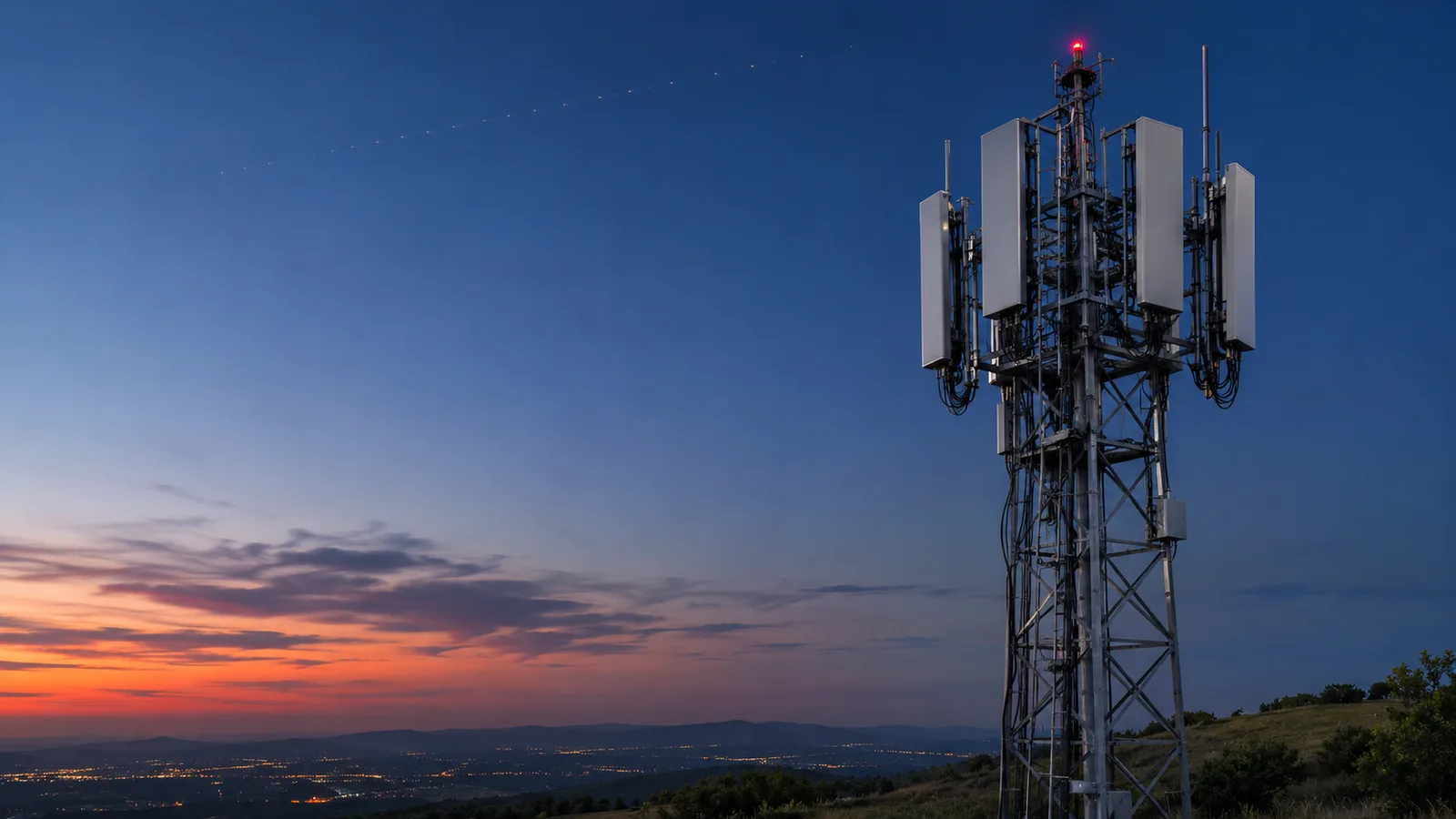
SpaceX has picked Qualcomm to supply the core radio technology for its Starlink Mobile 5G network in the United States, the chipmaker announced on Wednesday, November 4, 2026. Under a multiyear agreement, Qualcomm’s Dragonwing chips and software will power tens of thousands of cell sites, with the nationwide rollout set to begin in 2027.
The deal is the clearest sign yet that SpaceX is serious about running its own phone network on the ground, not just in orbit. It comes two days after reports that SpaceX was in talks to buy Boost Mobile from EchoStar to speed up a US carrier launch.
What Qualcomm Brings to the Starlink Mobile 5G Network
According to Qualcomm’s official announcement, SpaceX will use the Dragonwing QRU100 and QDU100 platforms along with Qualcomm’s commercial-grade Layer 1 software. The QRU100 handles processing inside the radio units, while the QDU100 takes care of latency-sensitive baseband work.
The base stations will use Massive MIMO radios with 64 transmit and 64 receive paths (64T64R). Qualcomm says the design improves coverage, capacity and spectral efficiency, and that better performance per watt should lower the cost of deploying the network at scale.
Durga Malladi, Qualcomm’s executive vice president for technology planning, told reporters that Massive MIMO is usually deployed at 3.5 GHz and above, while SpaceX plans to use it in the 2 GHz band, as Fierce Network reported. All sites will be macro cells rather than small cells. Qualcomm provides the chips and foundational software, while SpaceX builds the hardware boxes and the higher network layers itself.
“Starlink is building the first fully-integrated nationwide satellite and terrestrial network that will keep people connected no matter where they are,” said Michael Nicolls, Senior Vice President of Starlink.
Satellites Plus Towers
The ground network is meant to complement Starlink’s direct-to-cell satellites, which still struggle with indoor and dense urban coverage. SpaceX has already secured spectrum to become a major mobile operator, and the Qualcomm deal fills in the hardware side of that plan.
Financial terms were not disclosed. Malladi declined to share contract details, but said the rollout will “ramp up pretty rapidly” after it starts next year. CNBC noted that Qualcomm called it its largest 5G initiative to date, and that SpaceX has not yet named tower partners or said how many new towers it will need.
The bill will be large. Joe Madden, principal analyst at Mobile Experts, told Axios that SpaceX will likely spend at least $100 billion on its combined satellite and terrestrial network, including spectrum costs.
Both companies also framed the agreement as a first step toward AI-native 6G infrastructure. For now, the target is clear: a fourth US carrier that can compete with Verizon, AT&T and T-Mobile, building on the Starlink Mobile plans for 2027.