
IBM Nighthawk r3 Targets 10,000 Quantum Operations on 520 Qubits
IBM plans to link two Nighthawk r3 chips into a 1,040-qubit system in 2027, after r2 users ran 34 billion circuits and saw speedups of up to 19x over older chips.
 Hakkı ALKAN
Published 4 min read
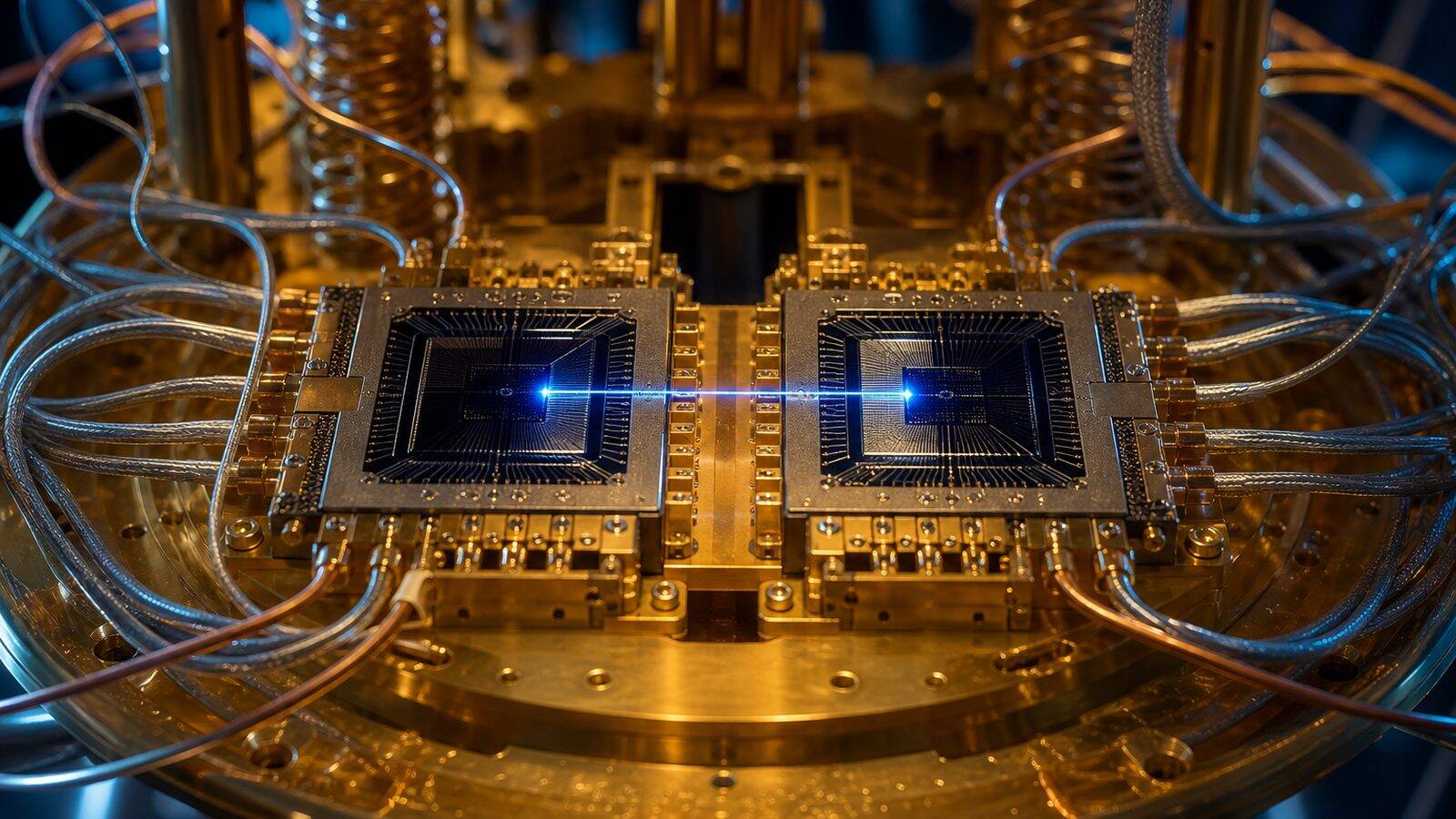
IBM Nighthawk r3, announced by IBM on November 11, 2026, is a next-generation quantum processor designed to run 10,000 quantum operations across 520 programmable qubits. IBM also plans to link two of these chips into a single 1,040-qubit system in 2027, which would be its first Nighthawk machine to pass the 1,000-qubit mark.
The company says r3 keeps the speed of the current Nighthawk r2 chip while handling much larger circuits. For now, this is a research and enterprise story: no consumer device runs on it, but it shows how fast IBM's quantum roadmap is moving toward its goal of fault tolerance, meaning machines that can correct their own errors.
What Is IBM Nighthawk r3?
A qubit is the basic unit of a quantum computer. Unlike a normal bit, it can hold a mix of 0 and 1 at the same time, which lets quantum chips explore many possibilities at once. According to the IBM Newsroom announcement, Nighthawk r3 has 520 programmable qubits out of 2,034 total physical qubits on the chip. The extra components support the working qubits.
The chip keeps r2's square-lattice layout, where each qubit connects to its neighbors in a grid. The main addition is 10 chip-to-chip links that IBM calls l-couplers. These long-range connectors are what will allow two r3 processors to behave like one larger machine.
| Processor | Qubits | Operations | Status |
|---|---|---|---|
| Nighthawk r2 | 120 | 7,500+ | Available since September 2026 |
| Nighthawk r3 | 520 programmable (2,034 physical) | 10,000 | Announced November 11, 2026 |
| Two linked r3 chips | 1,040 | Not specified | Planned for 2027 |
How Will IBM Reach 1,040 Qubits?
IBM says it has already tested the two building blocks. This year it connected Nighthawk r1 processors with four l-couplers and reached 99.3% quantum state transfer fidelity, a measure of how accurately information survives the jump between chips. The target is 99.9%.
The company also joined two cryogenic modules, the ultra-cold refrigerators that keep the chips working, into one system for the first time. That setup reached operating temperature in under five days and cooled below 15 millikelvin, a fraction of a degree above absolute zero.
Why Does Speed Matter in Quantum Computing?
A quantum computer does not return a single clean answer. Each run of a quantum circuit produces one sample, and serious workloads can need millions or billions of them. That is why IBM keeps stressing speed alongside qubit count.
Nighthawk r2 delivers up to 100,000 samples per second thanks to a fast qubit reset. As SiliconANGLE explains, that reset cuts the wait between runs from about 200 milliseconds to roughly 25 nanoseconds. IBM says clients including E.ON, Algorithmiq and Q-CTRL have run 34 billion circuits on r2, with speedups of up to 19x over earlier IBM processors.
Some examples are concrete. E.ON reported a 15x speedup in quantum machine learning for energy grid optimization, and an IBM simulation of magnetic materials with Oak Ridge National Laboratory ran 12x faster than on the older Heron chip. "Useful quantum computing hinges on whether results can be delivered with accuracy and speed, both are fundamental," said Jay Gambetta, Director of IBM Research.
What Changes on IBM Quantum Platform?
IBM is also merging classical and quantum computing in one managed cloud environment. This continues the approach behind its quantum-centric supercomputing architecture, where regular servers and GPUs handle error mitigation and post-processing while the quantum chip does the hard part.
IBM says RIKEN ran its sample-based quantum diagonalization workflow about 5 times faster with 100 times more computations, and Cleveland Clinic and RIKEN processed 608 million samples 33 times faster with automation. The platform also adds pulse-level access, so researchers can study errors at the hardware level.
What Does This Mean for You?
Our take: 520 qubits sounds huge, but these are physical, noisy qubits, not error-corrected logical ones. Nighthawk r3 will not break encryption or speed up your laptop. Its near-term value is in chemistry, materials science and energy optimization, where companies are already paying for faster sampling.
The bigger signal is modularity. If IBM can link chips reliably, quantum computers can grow by adding processors instead of building one giant chip. That is also why security teams keep watching research like the DeepMind RSA-1024 study and planning a move to post-quantum encryption well before useful machines arrive.
Relative test: IBM's own r2 chip ran 7,500 operations on 120 qubits. Nighthawk r3 aims for about 33% more operations on more than four times as many programmable qubits, and the 2027 system would double that qubit count again.