
A revolution is coming in OLED displays
Swiss scientists have made groundbreaking progress in OLED display technology. A team led by Associate Professor Chih-Jen Shih, a chemical engineer at ETH Zurich, has produced organic nano-OLEDs 100 times smaller than a human cell. These miniature light sources open up new possibilities for very…
 Samet Kelebek
Published 1 min read

Swiss scientists have made groundbreaking progress in OLED display technology. A team led by Associate Professor Chih-Jen Shih, a chemical engineer at ETH Zurich, has produced organic nano-OLEDs 100 times smaller than a human cell. These miniature light sources open up new possibilities for very high-resolution displays, advanced microscopes, and optical systems.
A Revolution in OLED Display Technology
The team has developed an innovative method that can produce these organic diodes, which convert electrical energy into visible light, in a single step. This technique has dramatically reduced the size of OLEDs compared to the standard OLEDs used in today’s high-end phones and televisions, down to the nanoscale.
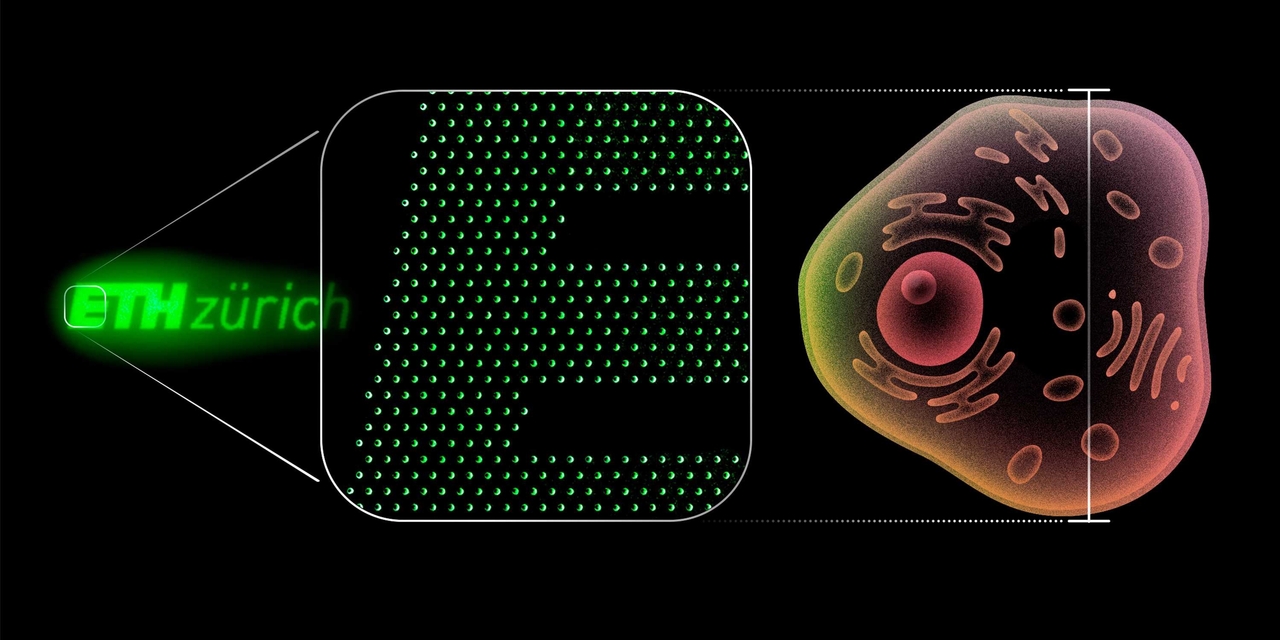
According to graduate researcher Jiwoo Oh, the smallest OLED pixel developed is only around 100 nanometers in diameter. This is approximately 50 times smaller than current standards.
To showcase the technology’s capabilities, researchers designed an array of 2,800 nano-OLEDs that forms the ETH Zurich logo. The resulting structure is just 20 micrometers high, about the size of a single human cell.
Dr. Tommaso Marcato, a lecturer at ETH Zurich, explains that this single-step manufacturing method allows for a pixel density approximately 2,500 times that of current displays.
Each pixel, measuring approximately 0.2 micrometers (200 nm), theoretically corresponds to a resolution of approximately 50,000 ppi (pixels per inch). This extraordinary density offers significant potential for high-precision displays in future virtual reality (VR) headsets and wearable devices.